JetClock Update

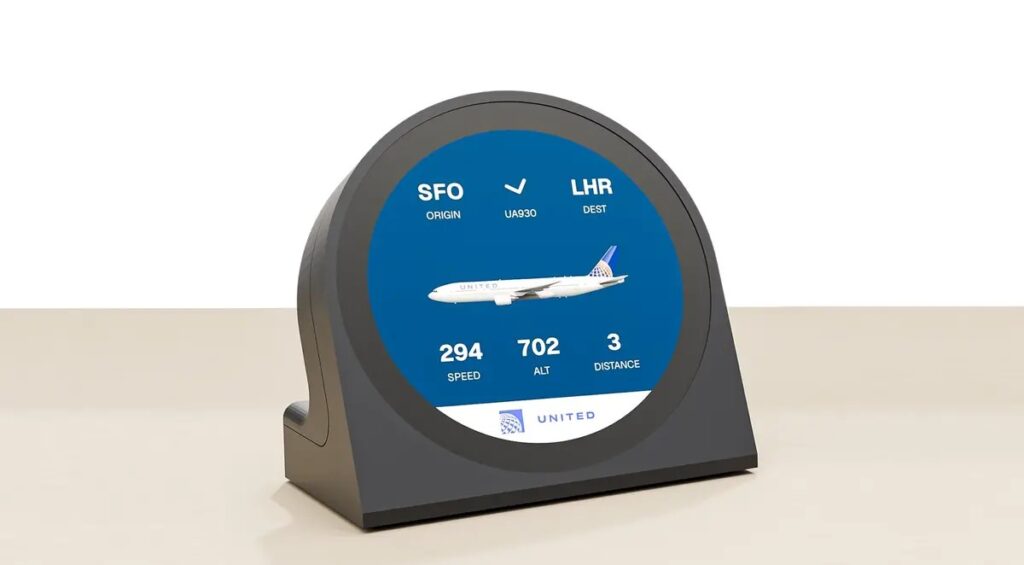
It’s just about been a week of owning my JetClock zero and there are updates to write about. Firstly, I bought a 7″ screen to display the data and it fits nicely on one of the bookshelves. Given the screen was quite cheap I was surprised at the quality. It works really well, had a decent menu to adjust settings, and can be powered via a USB C.
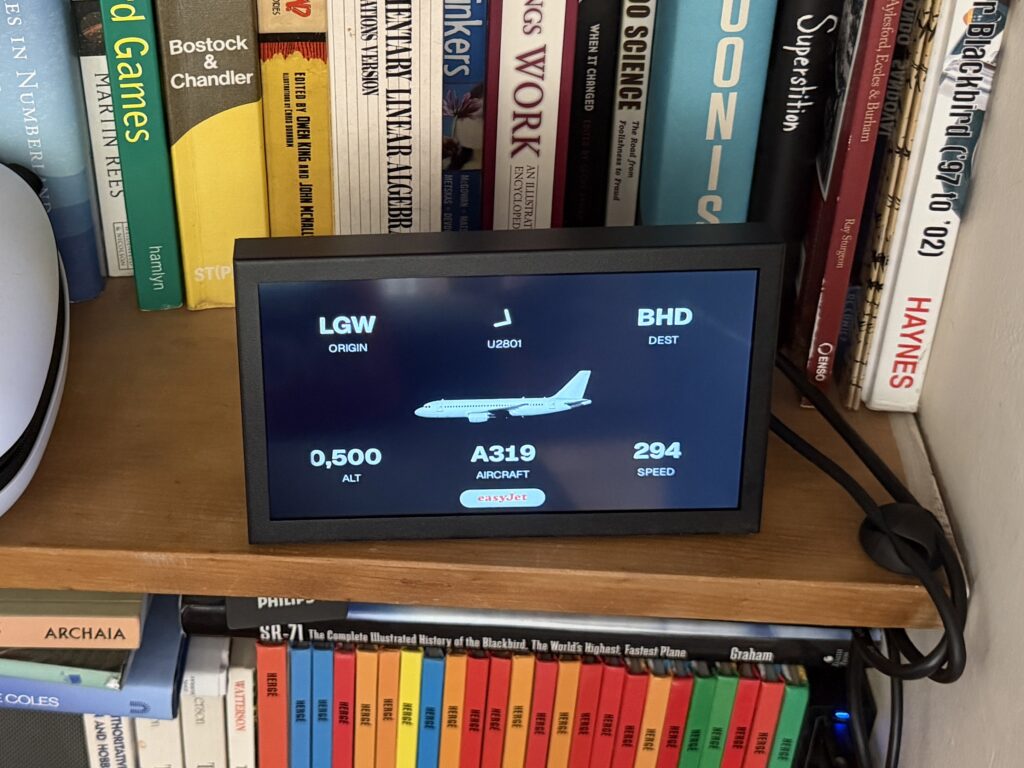
The JetClock Zero itself is set to turn the display off in the night time and will also restart itself at midnight to make sure it keeps updates and “fresh”. The colours of the display can be customised as can the details that the clock shows. I’m impressed with the settings that allow changing the direction of view so the clock can show aircraft only from the viewing angle that makes most sense. If I had a view of the sky from my workplace I would have one installed there and it would point to the aircraft in real life. As it is I have the JetClock to show all aircraft in a 30km radius and that works well. Although my view to the north is obscured slightly by the North Downs my southerly view is unimpeded and I often see aircraft head to land at Gatwick so the range on JetClock seems appropriate.
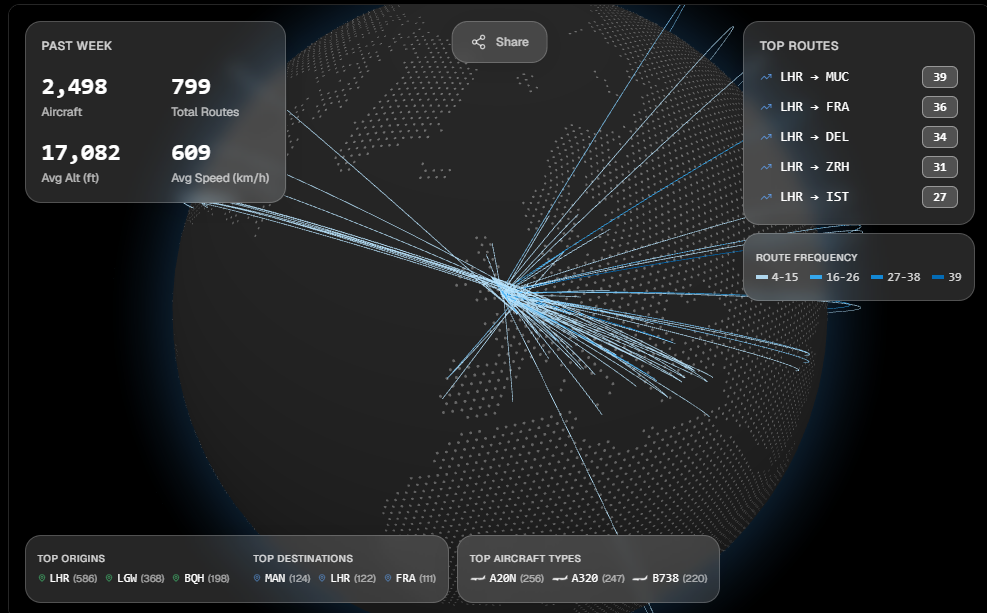
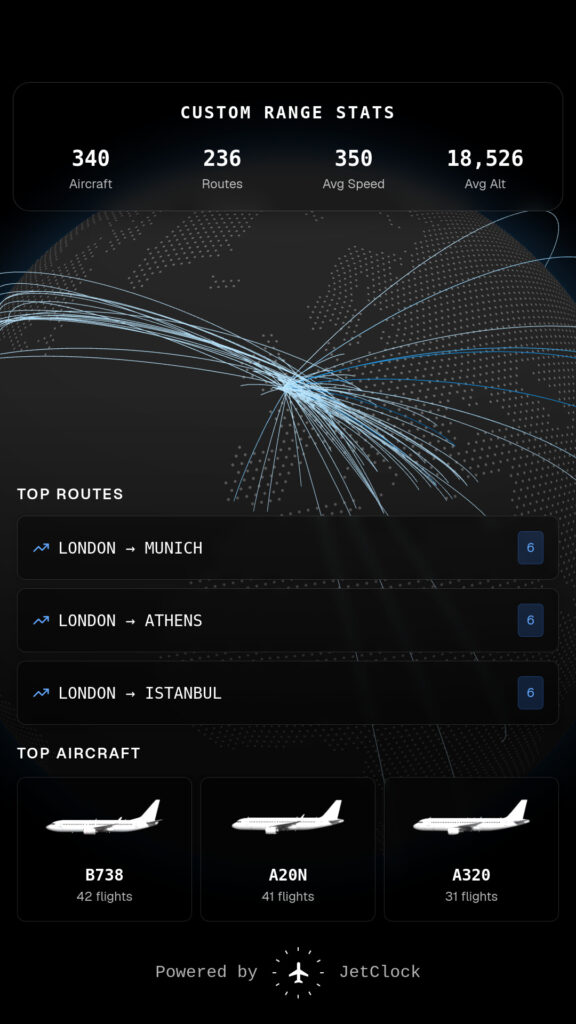
A good feature of the JetClock is the logbook which is a webpage that collates the data relevant to your position and clock. The clock itself doesn’t detect the aircraft it’s all done by a server somewhere, the same with the logbook. The image above is a summary of the first week of data collection and you can see I’ve had around 2,500 aircraft within viewing range of my house. I love the data this side of the JetClock produces. Very impressive.

I am fortunate (?) enough to live in the south east of the UK so I have aircraft launching themselves from the following largeish airports:

  • Heathrow
  • Gatwick
  • Stansted
  • Southend
  • London City

For the smaller aircraft I have Rochester and Headcorn reasonably close so get lots of little planes. For the medium aircraft I am directly under the flightpath for Biggin Hill so I will get plenty of private jets and also a bunch of Spitfires. Occasionally I get a flypast from a Chinook or Apache as there are a few helicopter landing sites in Kent. This is a pretty good place for spotting.
JetClock

I think I originally saw this product on Reddit. There’s a load of aviation geekery on that site and the JetClock turned up. Plenty of people have made their own aircraft indicator displays but of those I’d seen JetClock is the nicest and best looking. I knew I’d probably get one but waited for the right time. The company recently increased their product range to include a version without a display and also an Android app.

I bought the JetClock Zero as this seemed the most versatile version. I could use it on an existing display or I could buy my own screen if I wanted. Yesterday it arrived and the packaging was super nice. I don’t generally care for “unboxing” but the fact that the cables were in a reusable bag and the device itself was in a sealed bag made the whole experience really nice. It took a few minutes to set up the JetClock Zero but that was painless. I like the fact I can change the settings via a web-page but I am slightly concerned that the company aren’t asking for a subscription, I hope they’ve really thought that out.

Today I have ordered a 7″ display so that I can have the JetClock running permanently and on display. I know I want to put it in the lounge but I haven’t quite decided where and how it should be fixed yet. That’s some work to look forward to.

The Logbook is a lovely addition to the device. It’s an online database of aircraft that the JetClock has “detected”. The device doesn’t detect aircraft itself but relies on a server somewhere knowing the position of the JetClock and providing data to be displayed. I already have a Raspberry Pi in the loft that feeds aircraft data to an aggregation service and I have written about that extensively on this site. Below is an image of the logbook output:

I get pretty pictures of aircraft with the world map showing the routes my JetClock can see. I live in the south east of the UK and so aircraft are very common because of travel to and from London and also because the UK happens to lie on a line of the great circle from Europe and South West Asia to the USA. Another bonus for me is that Biggin Hill isn’t far away and plenty of smaller jets fly into there. I’m also sure that at some point over the weekend there will be a Spitfire popping over towards the White Cliffs.

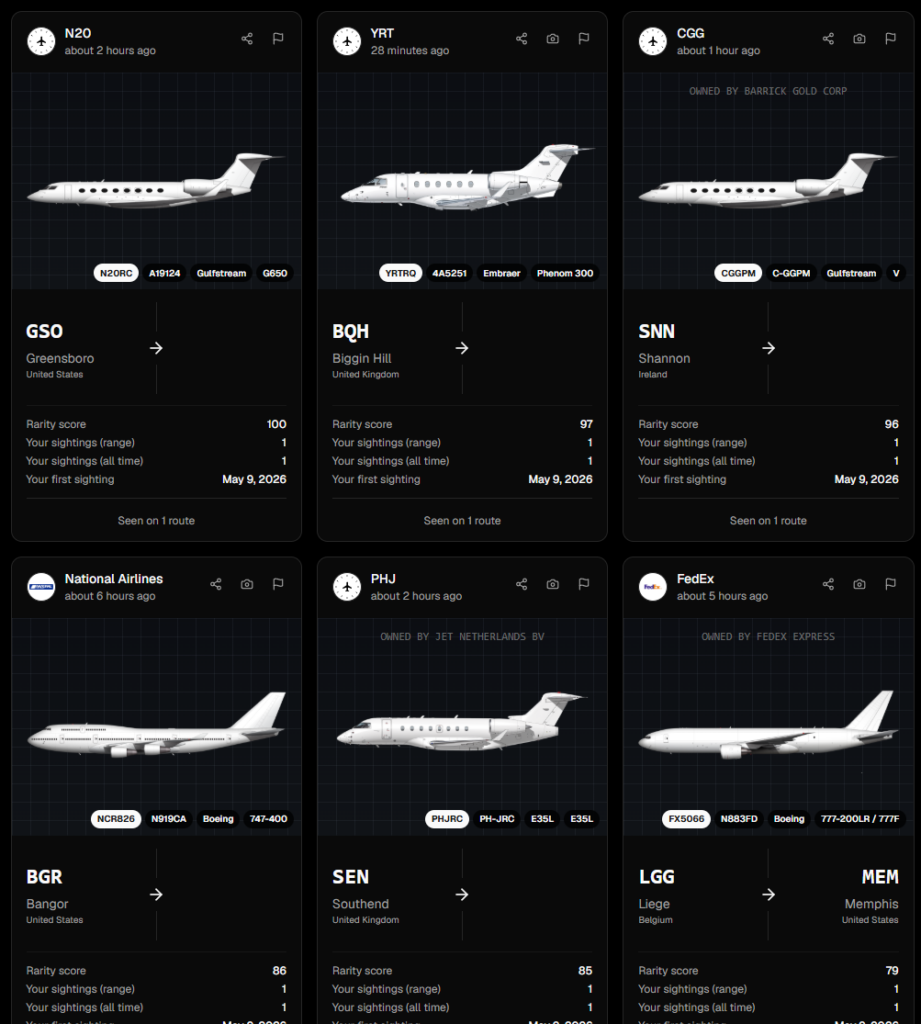
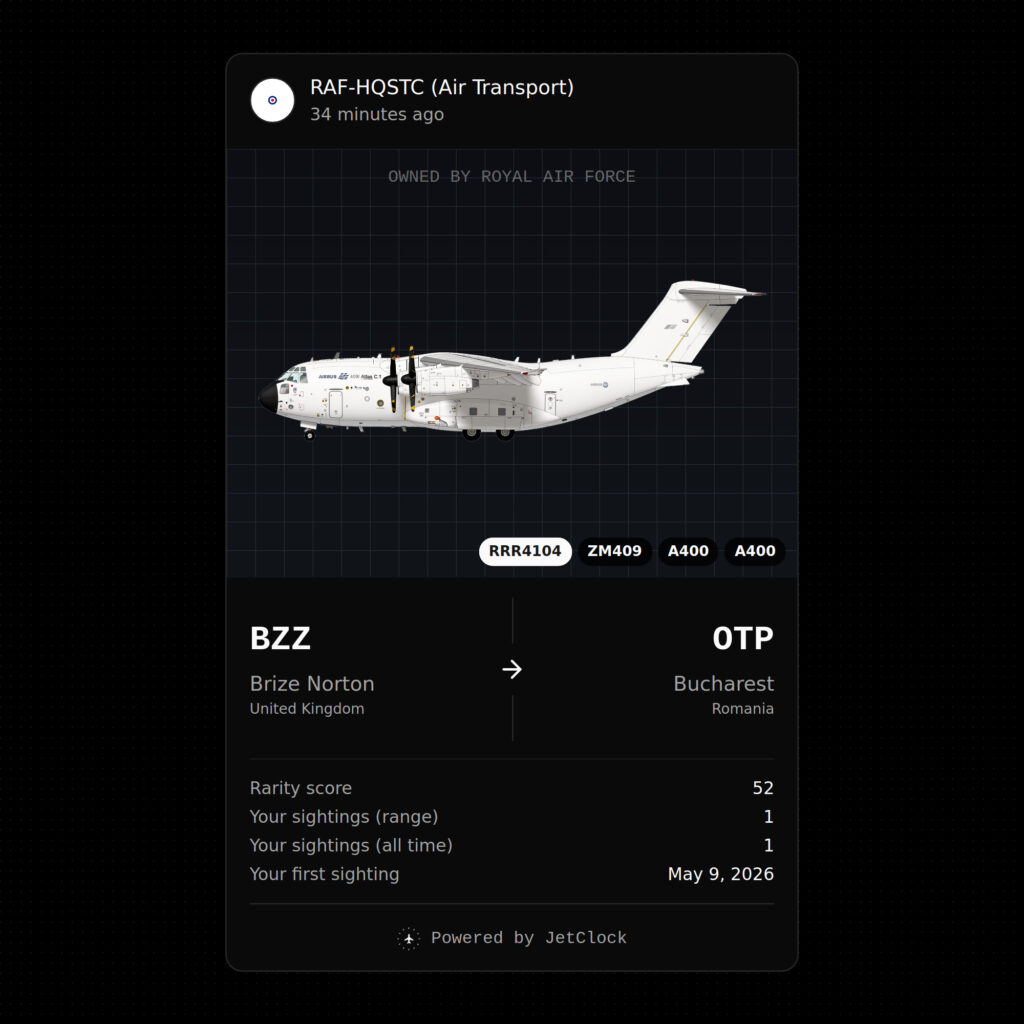
JetClock has a “rarity” score for aircraft. I’m not sure you could do a lot to increase the likelihood of seeing these unless you take your clock with you as you go around spotting. As you can see within 24 hours of set up I’ve already had a plane with rarity of 100. Just as I was writing this I heard an A400 fly over and I’m a little disappointed that its score is only 52! Maybe I’ll do better with the AN-22 that fly over a couple of times a week!

This device is great. Super easy to set up. The customisation options are brilliant and it gives me all the information I could want. Highly recommend.

Virtual Radar Server – Installed

Up in the dim warm loft of my house is a Raspberry Pi connected to an aerial. I’ve written about this a lot before, the thing tracks specific aircraft signals and then send those data off to a website for them to use to send to the world. I spent a little time yesterday adding the Virtual Radar Server software to the Pi so now I can see what my Pi sees in a useful format. I also have enabled this to be seen anywhere around the world using the brilliantness of the internet and such technologies. This picture shows you the UI and a long range view:

ADSB Receiver Range
ADSB Receiver Range

I think the aerial was picking up about 90 aircraft when I grabbed this screenshot. I still think that’s pretty impressive. Here’s a more local view:

ADSB - Local Details
ADSB – Local Details

I know I have some issues with range detection aligned with how my terraces rooves are arranged along with a bit of a block to the north of the North Downs, but still, I think it’s impressive.

Not A Great View

I was tracking a VW Group jet into Biggen Hill Airport in south east London and noticed that the waiting pattern was out over the North Sea.

Waiting For Biggen
Waiting For Biggen

I decided that the views out there can’t be that great. I’m also curious as to whether there is a beacon somewhere in the middle there. I don’t really know a great deal about the navigation of planes. VFR is easy, but other than that I need to read up about it all. Maybe I need another visit to Pooley’s?

Here’s a closer look at the waiting room:

Nothing To See
Nothing To See

This Embraer has left a beautiful track for us to see. This is the waiting area for London City and Biggen Hill.