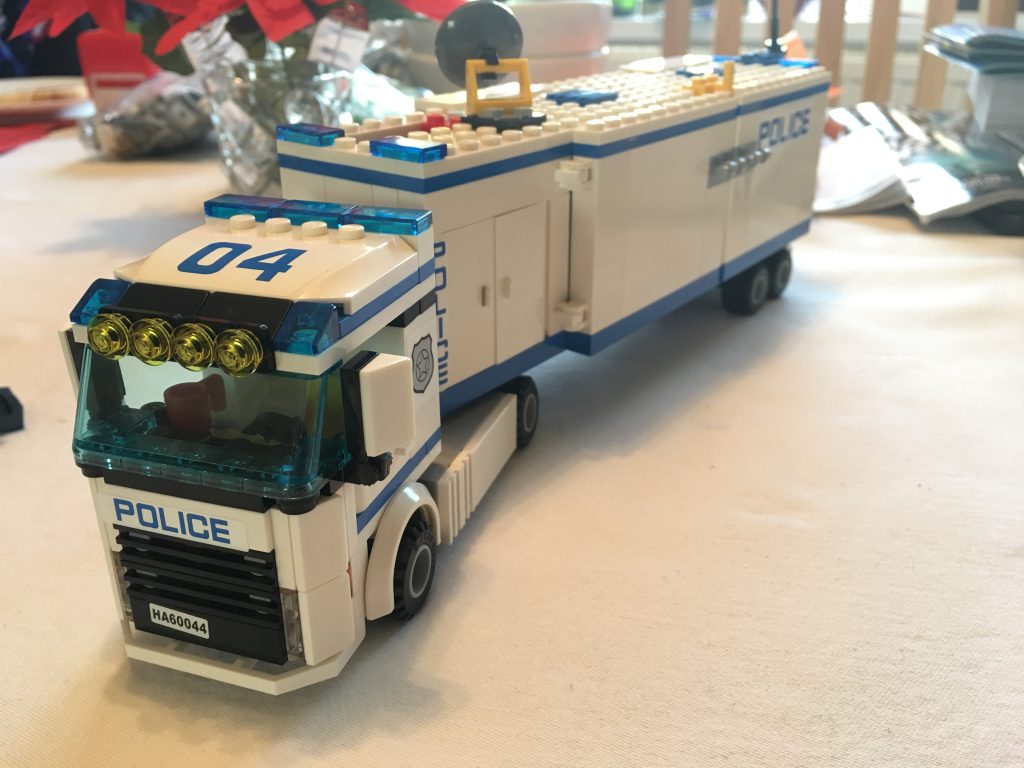
This is the second Lego season model made. It’s from the Lego City series which is one of my favourite. I like Space, Technic and Lego City the most. I do need to get in to the computer controlled stuff one day though.
Command Centre 60044
The sides open and give an internal view of the command centre.
Cops On Duty
Can you spot the prisoner in the cell? [far right].
I recently purchased a new (ish) car. The name of the new vehicle has yet to be decided but some things did need to be sorted out.
As a safety feature the car beeps an alarm inside the car while in reverse. There aren’t parking sensors so this was purely to warn the driver that you aren’t going to move forward when you depress the go pedal. This beeping was annoying. Googling around soon led to two potential ways to fix it.
If the Prius is pre-2010 then you can use the following method:
Step 1: Depress the brake pedal and hold it there.
Step 2: Press the Start/Stop button to turn on the engine.
Step 3: Push the Odometer button. Push the button on your dash designated Trip/Odometer until “ODO” is displayed on the screen. If it is already displaying this, you will have to cycle through the options to refresh it by pressing the button a total of three times.
Step 4: Press the Start/Stop button. Press the Start/Stop button to turn off the engine of your Prius.
Step 5: Press the Start/Stop button again. With your foot still on the brake, press the Start/Stop button again, and your engine will restart.
Step 6: Push and hold the Odometer button: Push the Trip/Odometer button again and do not release it.
Step 7: Press the park button. While still depressing the Trip/Odometer button, put your Prius in reverse, then immediately push the Park button. Do not release the Trip/Odometer button until this is complete.
Step 8: Push the Trip/Odometer button. Instead of the usual miles traveled on the odometer display, there should be the text “b on.” Push the Trip/Odometer button until the dashboard displays the text “b off.”
Step 9: Press the Start/Stop button again. Press the Start/Stop button again to turn your Prius’ engine off. The reverse beep is now disabled, and you will not hear it again in future trips.
This, I think, is the car equivalent of ctrl-alt-del and using reg-edit and BIOS simultaneously. Now, I can follow instructions, but I wasn’t looking forward to doing this. My car is registered as a “59” but apparently it was a 2010 model as when I looked under the dash there was a OBD2 connector.
It turns out that car manufacturers have standardised the laptop connections to the car and its CPU. This makes sense and it also allows people to connect their own devices and customise or fix or break their own car.
So, I invited a friend over who tries does hack his own car and attempt to improve or fix it. He has a Bluetooth and WiFi connector and I downloaded the Carista app on my phone. After connecting the adaptor to the car and then getting the phone secure connection running the app decided to run some diagnostics tests.
After a short while I was able to pay for a week’s subscription to the Carista app and then able to change the settings.
My car no longer constantly beeps when reversing. It beeps once. Which is good.
I also turned off the seat belt alarm. That would beep constantly too if the driver didn’t have a seat belt on. I always wear my seat belt so this noise isn’t needed either.
I had some wine the other night, which was not a normal occurrence as I have given up drinking at home. The bottle was labelled and on the label was a latitude longitude coordinates.
It’s A Wine Label
Clearly this had to be investigated. You can’t mention numbers that can be checked without someone wanting to check them. I remember watching an Aussie TV show called Rescue Special Ops where they mentioned a location and so I went on Google Earth to check out where it was. The writers had done their job properly as the location was definitely in the bush [there is an awful lot of it].
So, apparently Rioja is an area in Spain. These are things I don’t really know, it could have been a person or something similar but I guess it’s logical given that Bordeaux is also a place.
So, I have saved you the time of typing in the lat long. Here is the location:
It’s a vineyard. There’s also a vineyard about 506 metres away from my house.
The other day I had another go on a PSVR headset, just to see some more trailers and play another part of a game. See this communication about why I had to sell my PSVR. One of the trailers I watched was me strapped in a chair being attacked by what looked like a zombie. This was mostly fine.
Then I played a Call Of Duty demo where I was flying a space ship. I probably managed about thirty seconds before I had to stop as the feelings of sickness were rising.
It was a good thing that I sold the PSVR (which saddens me).
I recently spent some time in the A&E department of a Kent hospital. This may or may not have been related to the previous communication. While waiting for the hours to pass I read every poster and most of the magazines in the minor injuries department. This is mostly foolish as none of it is interesting. I did see this though:
Hospital Report
I will highlight some areas of this poster. You can click on the poster to see a larger version.
Apparently 72% recommend a service, maybe. We aren’t made aware of what those 72% are recommending. It could be the coffee from the machine [I didn’t see one]. Without knowing the question this set of data make no sense.
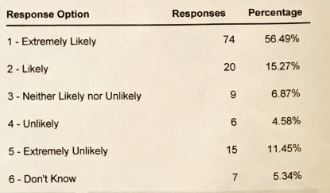
Next of note are the responses on a scale of 1 – 6.
Responses
The percentages for these have been given to two decimal places, just in case you were desperate to know. Again we don’t know what question was being asked. The poster doesn’t say.
As for the two charts, these tell us nothing new. Absolutely nothing. They replicate the data given in the list. They are utterly pointless. I’m not known for being a fan of pie charts and this one is terrible. In my opinion if you’ve used a pie chart you haven’t done the best you can in interpreting your data.
Pie Chart
Bar Graph
Then, most helpfully we get a list of the most recent types responses to a survey question WHICH WE DO NOT KNOW.
Comments
Now we can guess the question. We also have a pretty good idea of what all of this means, but we aren’t told. This poster could have been way more informative, way simpler to read and quite a bit clearer. It says the same thing THREE times.
I’m not really having a go at the hospital. I imagine that they have been told it’s a target to make sure they have these feedback responses pinned on the wall for all to see. The hospital doesn’t have enough time or money to do this well and so they rely on a bit of software or an external agency that then does a print run and these things are pinned up all over the place. If hospitals and the NHS could be left alone to get on with their jobs, if reform was stopped, if the staff were listened to then maybe, just maybe, things like this useless poster could be stopped and the service returned to the excellence it once was.
YES I blame the tories.
Much like the shit that is happening in education at the moment.
This is just a tiny communication to get over in a basic way my concern about the next four years with Trump as president of the USA. I’m going to quote the current POTUS, it is part of his response to being asked about being black and how he manages that when talking to people:
My general theory is that if I was clear in my own mind about who I was; comfortable in my own skin; and had clarity about the way in which race continues to be this powerful factor in so many elements of our lives, but that it is not the only factor in so many aspects of our lives; that we have by no means overcome the legacies of slavery and Jim Crow and colonialism and racism, but that the progress we’ve made has been real and extraordinary; if I’m communicating my genuine belief that those who are not subject to racism can sometimes have blind spots or lack appreciation of what it feels to be on the receiving end of that — but that doesn’t mean that they’re not open to learning and caring about equality and justice — and that I can win them over, because there is goodness in the majority of people; I always felt that if I really knew that and I just communicated it as clearly as I could, that I’d be okay.
Now compare that with PEOTUS response to a question about saying he would lock up Hillary Clinton:
Well, I’ll tell you what I’m going to do, I’m going to think about it. Um, I feel that I want to focus on jobs, I want to focus on healthcare, I want to focus on the border and immigration and doing a really great immigration bill. We want to have a great immigration bill. And I want to focus on all of these other things that we’ve been talking about.
And also what he said when asked about what the Bushes said when they called:
Well, it was very interesting. I got a call from Father Bush, who is a wonderful man. And he just said, “Congratulations. It was an amazing campaign.” And then I got a call from George and he said– “Congratulations. It was great.” And, you know, look, it’s– it’s a tough situation. I went to war with Jeb. And Jeb’s a nice guy, but it was a nasty campaign. It was a nasty campaign. And, I mean, I’m disappointed in one thing. He signed a pledge and I don’t know how you sign a pledge and then you don’t honor it. It was a rough primary. It’s a rough primary. Although I think the general was probably just as tough. Probably as a combination, it was the roughest ever.
I fear for the English language and I fear for the world.
Recently had a good weekend at SMP near Folkestone. It was a training weekend giving skills to the CCF so they are ready to get on and enjoy some of the activities we do. On the first full day the weather was pretty poor and although warm [ish] it was overcast and drizzly. The second day was much better with brilliant sunshine and a glorious sun rise. There now follows a gallery of some of the best shots I took.
Time For Tea
Twisted Fire Starter
Parade Square
Not Concealed
Training Area Valley
Sports Field
Training
Drone Training
Catching The Light
Ready
Look At The Blue
One night at SMP I had to accompany someone to hospital. Arriving at 23:00 we finally left the minor injuries section at 03:15. Given that reveille was at 06:00 this was harsh, got into bed at 03:45. The following day was quite hard although I did manage a kip in the drone training room.
Yes, I made the title a tautology. Deliberately. Sorry.
Every now and then I create draft communications and hope to complete them at some point. There have been many that I have started but not completed. Some have died because I forgot what they were about and some have died because I simply don’t have the time to complete the communication to a good enough standard. Yes, there are standards on this site!
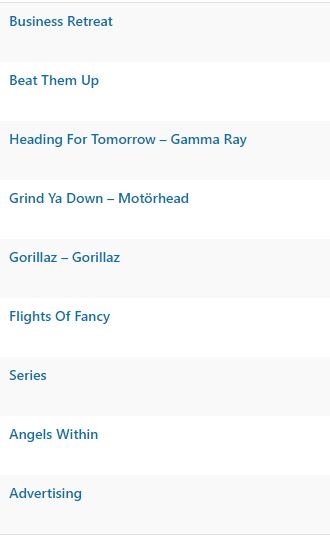
My current list of draft communications is:
Some of these are album reviews, which are going well but less often that initially. I’ll finish it one day.
“Advertising” may never get written because it’s about the complaints I have made to the ASA and a general rant about how terrible advertising is.
“Angels Within” is a classic take down of a bullshit magazine and website. It’ll be quite a rant but needs about two hours to complete to a decent level of shittyness.
“Flights Of Fancy” is a Fooyah investigation of the theory behind the common belief that the football at the Mile High Stadium travels further than at sea level. I have spent about an hour looking into this and I think the result will go against my initial scepticism but if that is where the evidence leads then so be it.
“Business Retreat” is a title I added but have no current idea what it is about or why I titled a communication so. I have a sneaky suspicion that it’s me ranting about Brexit. I need to rant about it. But I would also quite like the arguments to be coherent which I find difficult to express. That’s just me, I can get overwhelmed and struggle to form the best words in a good enough order to create a formal argument.
“Beat them Up” is me moaning at a news headline on the BBC and taking the article apart. It’s the education system being shat upon, surprise, surprise.
So, there, keep your eyes open or your twitter feeds running with alerts. These may or may not get written.
Sometimes you work with or know people who don’t use the correct terminology. It can occasionally be a minor irritation but also is a problem because using specific language is important to be able to communicate or understand a particular topic. So, in the past, people I have worked with have used the term “screen saver” when they meant “desktop background”. It’s a minor problem but they are wrong. Screen savers are quite specific and no longer necessary although possibly fun.
Below are the pictures I use as my desktop background at home. All were taken by me and so I own the copyright on them. Yes, I am rather proud of all the pictures. Yes, I like aircraft.
Discovery NASM
F-14 Tomcat NASM
Hercules RAF Mildenhall
Osprey RAF Mildenhall
Eagle RAF Lakenheath
Eagle RAF Lakenheath
Tornado RAF Wyton
Globemaster RAF Brize Norton
Voyager RAF Brize Norton
Hercules RAF Brize Norton
AN124 RAF Brize Norton
Dakota RAF Brize Norton
RAF Brize Norton
Merlin RAF Benson
Puma RAF Benson
I will probably change these over time, but I do want to see many more flying machines. It’s a fascination and passion. Somewhere in these erstwhile communications there are pictures of my iPhone backgrounds, somewhere. Use the search box.
My phone background is currently an obsession with the M’Era Luna festival in Hildesheim.